
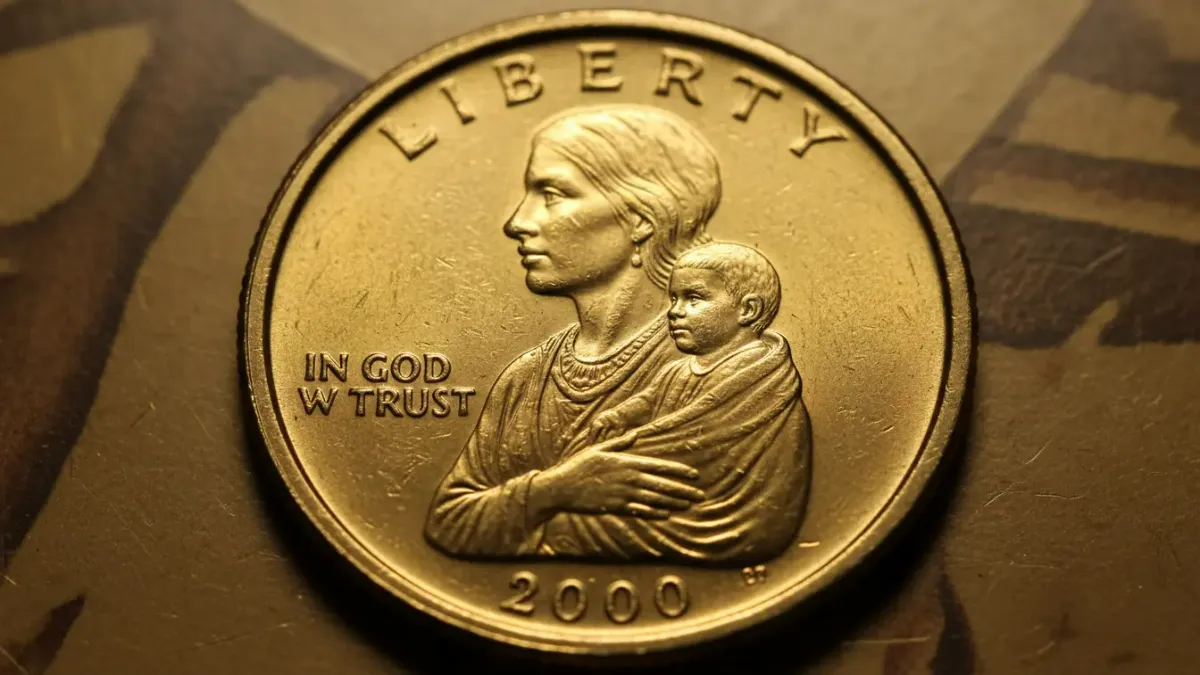
The Sacagawea dollar is a modern U.S. coin that many people overlook, often assuming it holds little value beyond face worth. However, a very small number of rare Sacagawea dollars are among the most valuable modern coins ever produced. Some of these exceptional pieces have reached values as high as $2.1 million, making them a dream discovery for collectors. Understanding how to identify these rare coins is essential.
Understanding the Sacagawea Dollar
The Sacagawea dollar was first issued in 2000 by the United States Mint. It features Sacagawea, the Native American guide of the Lewis and Clark expedition, carrying her infant son. The reverse originally showed a flying eagle. The coin has a distinctive golden color, though it contains no real gold.
Most Sacagawea dollars were minted for circulation and are common today. Only a few rare errors and prototypes hold extraordinary value.
Why Some Sacagawea Dollars Are Worth Millions
The multi-million-dollar value is linked to extremely rare minting errors and experimental strikes. These coins were never meant for public circulation and were produced in very limited numbers. Their rarity, combined with strong collector demand, has pushed their value into the millions.
The most famous high-value example is the Sacagawea–Washington Quarter mule error.
The Famous Mule Error
A mule error occurs when a coin is struck using two mismatched dies. In this case, the coin features:
- A Sacagawea dollar obverse
- A Washington quarter reverse
Instead of the eagle design, the back of the coin shows George Washington, which should never appear on a dollar coin. Only a handful of these mule coins are known to exist, making them incredibly valuable.

Key Signs to Look For
Unusual Reverse Design
Check the reverse carefully. If the coin does not show an eagle or later Native American designs, it may indicate a rare error.
Weight and Thickness
A standard Sacagawea dollar weighs about 8.1 grams. Any noticeable difference could signal an experimental planchet or error strike.

Edge and Finish
Rare prototypes may have a smoother or sharper edge, unusual surface texture, or a different metallic appearance.
Sharp Details and Condition
Coins in near-perfect or uncirculated condition are significantly more valuable, especially when combined with rare errors.
Important Years and Coins to Examine
Collectors should pay close attention to:
- 2000-P Sacagawea dollars
- Coins with mismatched obverse and reverse designs
- Coins with missing, doubled, or unusual details
- Coins with non-standard metal composition
How to Confirm Authenticity
Due to the high value involved, professional authentication is essential. Suspected rare coins should be submitted to recognized grading services such as PCGS or NGC. These experts verify authenticity, identify mint errors, and assign an official grade that determines market value.
Can a $2.1 Million Sacagawea Dollar Still Be Found?
Although the chances are extremely low, rare discoveries have occurred years after coins entered circulation. Some valuable Sacagawea dollars were found in bank rolls and private collections, keeping hope alive for collectors and enthusiasts.
Final Thoughts
The $2.1 million Sacagawea dollar is not an ordinary coin but a product of rare minting mistakes and limited experimental strikes. While most Sacagawea dollars are worth only face value, careful inspection and knowledge can separate a common coin from a historic treasure. Understanding the signs of rare errors is the first step in spotting one of the most valuable modern U.S. coins ever made.